Nintendo
Nintendo was founded on September 23, 1889, by Fusajiro Yamauchi in Japan, and originally manufactured Hanafuda playing cards—a traditional Japanese game.
In the 1970s, faced with declining sales of its playing cards, Nintendo decided to shift its focus and begin producing electronic games, following in the footsteps of companies that were starting to achieve great success, such as Bandai and Atari.
Their first device was the Game & Watch—a series of minigames with liquid crystal displays, created by Gunpei Yokoi.The company's first major success in the gaming market came with the game Donkey Kong, created by Shigeru Miyamoto, who would go on to become the company's lead designer.
In 1983, Nintendo entered the console market by launching the Famicom in Japan. The console became a global success, selling over 60 million units; it was later released in the United States in 1985 as the NES (Nintendo Entertainment System).
In 1989, Nintendo launched its first handheld gaming device, the Game Boy. It sold over 118 million units worldwide (including the Game Boy Color) and introduced one of Nintendo's most famous handheld franchises: Pokémon.
In 1991, the company released the successor to the Famicom: the Super Famicom (known as the Super Nintendo in the West), a 16-bit console that sold 49 million units.
In 1996, the Nintendo 64 arrived, designed to compete with the PlayStation and the Sega Saturn. It sold over 32 million units globally and served as the company's first console to feature polygonal graphics, highlighted by titles such as Super Mario 64 and The Legend of Zelda: Ocarina of Time.
In 2001, Nintendo launched two consoles: the Nintendo GameCube, which replaced the Nintendo 64, and the Game Boy Advance, the successor to the Game Boy.
The GameCube sold over 21 million units and featured hits like Resident Evil 4 and the Resident Evil remake, while the Game Boy Advance sold over 80 million units and included successful titles such as Metroid Fusion and... Pokémon Emerald.
In 2005, Nintendo released the successor to the Game Boy Advance, the Nintendo DS. It introduced an innovative dual-screen design and became a massive success, selling over 150 million units (including the DS Lite, DSi, and DSi XL models).
In 2006, the Nintendo Wii was launched. The console captured global attention with its innovative motion-sensing controllers, which enabled new ways to play games; it became a huge success, selling over 100 million units worldwide.
In 2010, Nintendo released the Nintendo 3DS, the successor to the DS, which featured two screens—one of which offered 3D visuals without the need for special glasses. It sold over 70 million units.
In 2011, Nintendo launched the Nintendo Wii U, the successor to the Wii, which featured a tablet-like controller; it sold over 13 million units worldwide.
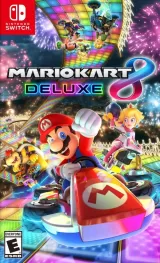
In 2017, Nintendo released the Switch, a hybrid console that functions as both a portable and a home system. With graphical power slightly superior to that of the Wii U, the console became a major success—far surpassing its predecessor, the Wii U, in sales—bolstered by titles such as Mario Kart 8 Deluxe, which sold over 70 million units.
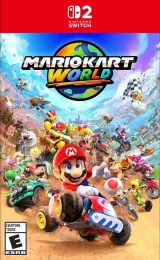
On June 5, 2025, Nintendo launched the Switch 2, the successor to the Nintendo Switch, priced at $449 in the United States and 49,980 yen in Japan. Mario Kart World is its best-selling game to date, with 15 million units sold.
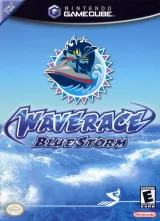
This company is responsible for games like Mario Kart 64, Mario Kart 8 Deluxe, F-Zero X, Super Mario Kart, F-Zero, Mario Kart: Super Circuit, Mario Kart: Double Dash!!, Cruis'n USA, Cruis'n World e Wave Race 64.
Founded in: September 23, 1889
Also known as: 任天堂株式会社, Nintendo Co.
Nintendo's links
en.wikipedia.org/wiki/Nintendo
bd jogosbd jogos english



Filter by game system
Filter by genre
All
ActionAdventureAmerican FootballBaseballBasketballBoard gameBoxingCasinoCollectionEducationalFightingFirst Person ShooterGolfHockeyMetroidvaniaMiscellaneousPinballPlatformPuzzleRPGRacingRail ShooterRhythmRogue-likeShoot 'em upShooterSimulationSoccerSportsSports ManagerStrategySurvival HorrorTennisThird PersonVolleyballWrestling